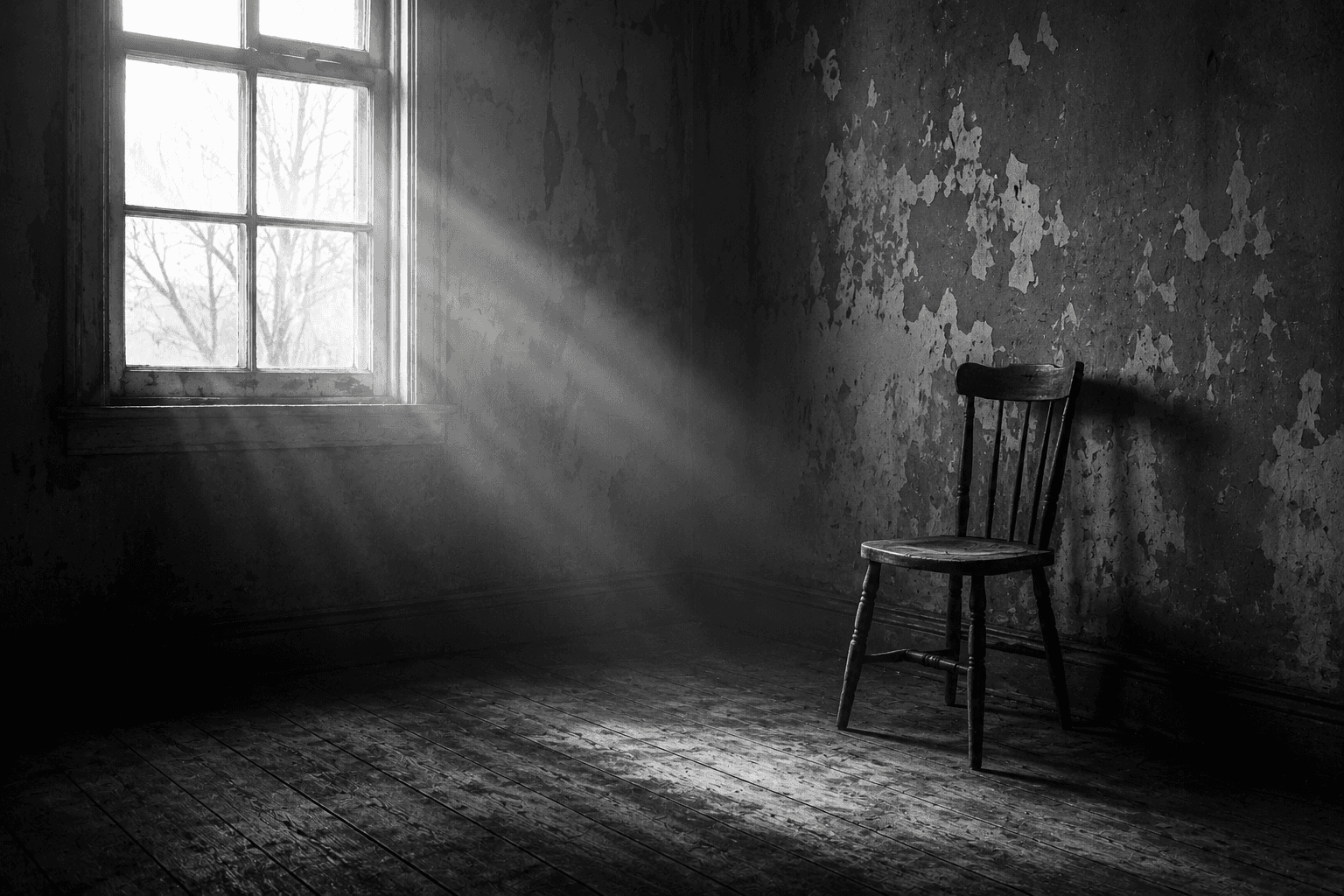
I do not understand it, but I lived it, and living it taught me that silence is not the absence of sound but the presence of something else entirely. Something that accumulates in the corners of conversations like cobwebs, something that transforms love into duty and intimacy into act until you forget the difference between being strong and being numb.
We are taught this silence from birth.
"Children should be seen and not heard," they told us, and we learned. We learned to sit quietly while adults spoke around us as if we were fixtures. We learned to raise our hands in school and wait to be called upon, to speak only when spoken to, to measure our words carefully before they left our mouths. We learned that silence was safety, that the quiet child was the good child, that speaking out of turn brought consequences we did not want to face.
"Speech is silver," the proverb tells us, "but silence is golden." Golden. As if keeping our mouths shut were a precious metal we could hoard, as if the words we swallowed were coins we could save for some future transaction that would never come.
The lesson of silence runs deep in our culture. In classrooms where we learned to raise our hands and wait, sometimes forever, for permission to speak. In churches where we sat in pews and listened to sermons about virtues we were too young to understand, our voices rising only in the allowed hymns at the right moments. In family dinners where certain topics were forbidden, where we learned to read the mood in our parents' faces and adjust our conversation accordingly.
We were taught that silence was respect.
Silence was wisdom.
Silence was strength.
What we were not taught was how to distinguish between the silence that protects and the silence that destroys, between the quiet that comes from having nothing to say and the quiet that comes from having too much to say and not feeling safe enough to say it.
This degree I’d earned, Silence, followed me into adulthood. It was a degree I had never applied for but somehow earned. I became fluent in not saying things, expert at the deflection and the master of changing subjects. I learned to translate every difficult emotion into acceptable small talk, every genuine concern into polite inquiry.
When people asked how I was doing, I said fine because fine was what we had been taught to say. Fine meant you were not making trouble. Fine meant you were not asking for more attention than you deserved. Fine meant you understood your place in the social contract that kept everyone at a safe distance from everyone else's pain.
But fine is not a feeling. Fine is the absence of feeling, or the refusal to acknowledge feeling, or the fear that feeling too much will overwhelm everyone around you.
The silence felt safe because it was familiar. It felt like control because we had been told it was control. That the person who spoke less had more power, that the one who revealed nothing could never be hurt by what they had revealed. We confused emotional withholding with emotional strength, mistook our inability to be vulnerable for an ability to be independent.
We were wrong, but we did not know we were wrong because everyone around us was making the same mistake, had learned from the same teachers, carried the same unexamined assumptions about what it meant to be strong, to be good, to be worthy of love.
This is how silence works. It spreads like a contagion. When you refuse to be real with people, they stop being real with you. When you will not let them see your struggles, they stop sharing theirs. When you insist on performing rather than being, you teach them that performance is all you want from them too.
I began to notice the cost in the gaps in phone calls, in conversations that felt scripted, in relationships that had all the appearance of intimacy but none of its substance. I saw it in the careful distance people maintained even when they were trying to get close, in the way we had all learned to dance around each other's edges without ever touching the center.
We had become experts at connection without vulnerability, intimacy without risk, love without the possibility of loss. Which is to say we had become experts at the appearance of these things rather than their reality.
The culture that had taught us to be seen and not heard had produced a generation of people who were visible but not known, present but not available, speaking but not saying anything that mattered.
My recognition was a slow, creeping awareness that I had become someone I did not particularly like or recognize. Someone who asked about others' lives not out of genuine interest but as a way to avoid revealing anything about my own. Someone who had so perfected the art of pleasant conversation that I had forgotten how to have a real one.
I thought about all the conversations I had avoided, all the truths I had buried, all the opportunities for genuine connection I had squandered in the name of maintaining the peace, keeping things light, not being too much for anyone to handle.
Learning to speak authentically after decades of practiced silence is like learning to use muscles that had atrophied. The words feel strange in my mouth, unfamiliar and unwieldy. I stumble through conversations about feeling and meaning and the difficulties of being human that we had all been trained to handle privately.
But something remarkable happened as I practice this new honesty. People began to respond with their own. The vulnerability I had been taught to hide became an invitation for others to share. Friends told me about their own struggles with depression, with anxiety, with the difficulties of being alive that they had been hiding behind their own acts.
I realized that we had all been living in a world where everyone was pretending to be fine, where authentic connection was rare because we had all learned the same lessons about the dangers of being too much, too needy, too real.
The proverbs we learned as children turn out to be more complicated than we thought. Speech may be silver, but some speech is more valuable than gold. Some words are worth their weight in connection, in understanding, in the relief that comes from discovering you are not alone in whatever it is you are carrying.
Some silence may be golden, but many silences are fool's gold, they glitter with the promise of safety but crumble when you try to spend them on anything that matters.
We learned to be seen and not heard, but being seen without being heard is not being seen at all. It is being observed, catalogued, managed. It is existing as object rather than subject, as something that happens to others rather than someone who participates in what happens.
I try to tell people now when I am struggling, when I am grateful, when I am worried about them. I say "I love you" more often than feels natural because I have learned that those words do not lose their power through repetition, they gain it. I have stopped waiting to speak, stopped requiring myself to have perfect words before I am willing to share imperfect feelings.
The flowers bloom each spring whether we notice them or not, but they are more beautiful when we take the time to point them out to each other. Love exists whether we voice it or not, but it grows stronger when we give it words. Pain persists whether we acknowledge it or not, but it becomes more bearable when we allow others to witness it.
We were taught that silence was golden, but we were never taught what to spend it on. We hoarded our silence like misers, growing rich in isolation and poor in connection, until we forgot what wealth was supposed to be for.
The silence may feel safer, but it is the words, imperfect and inadequate and courageously honest, that save us from the loneliness we learned to call strength.